The Writing on the Wall

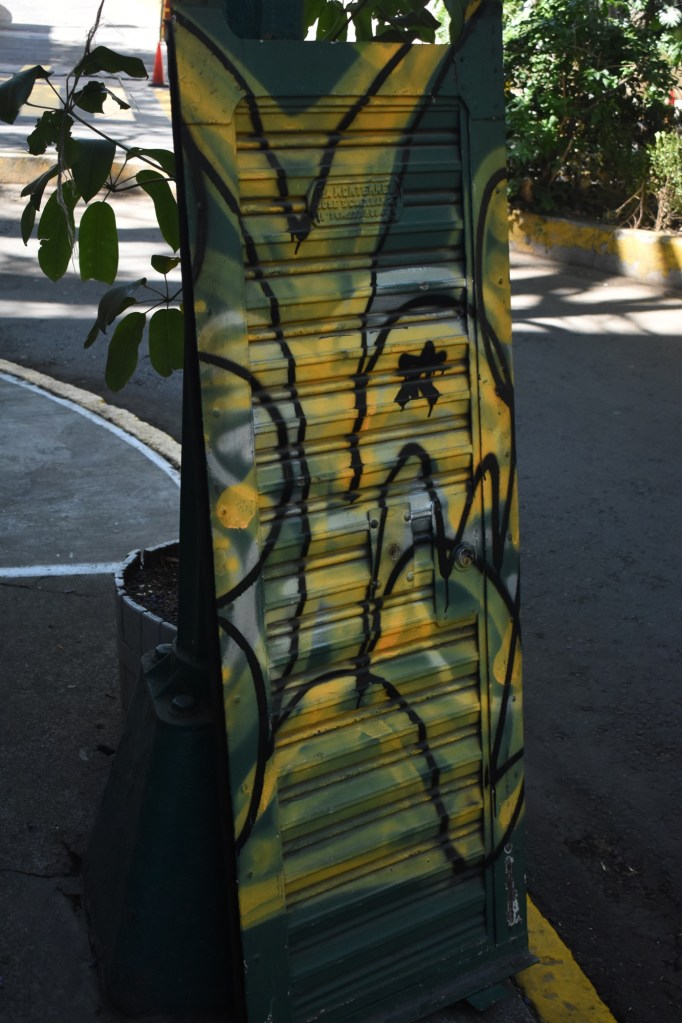
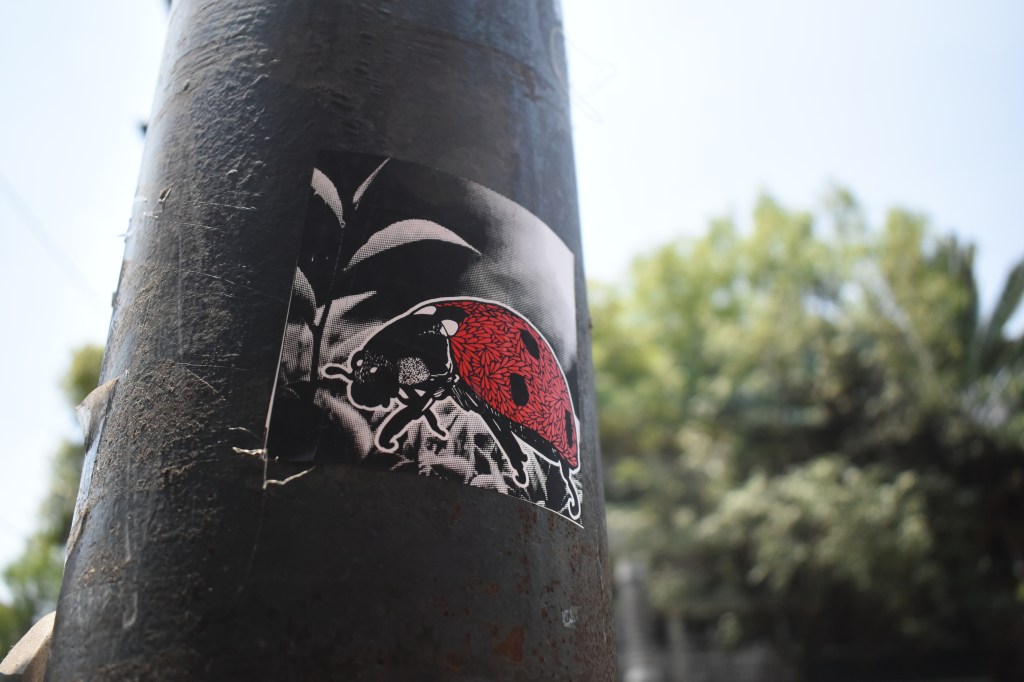
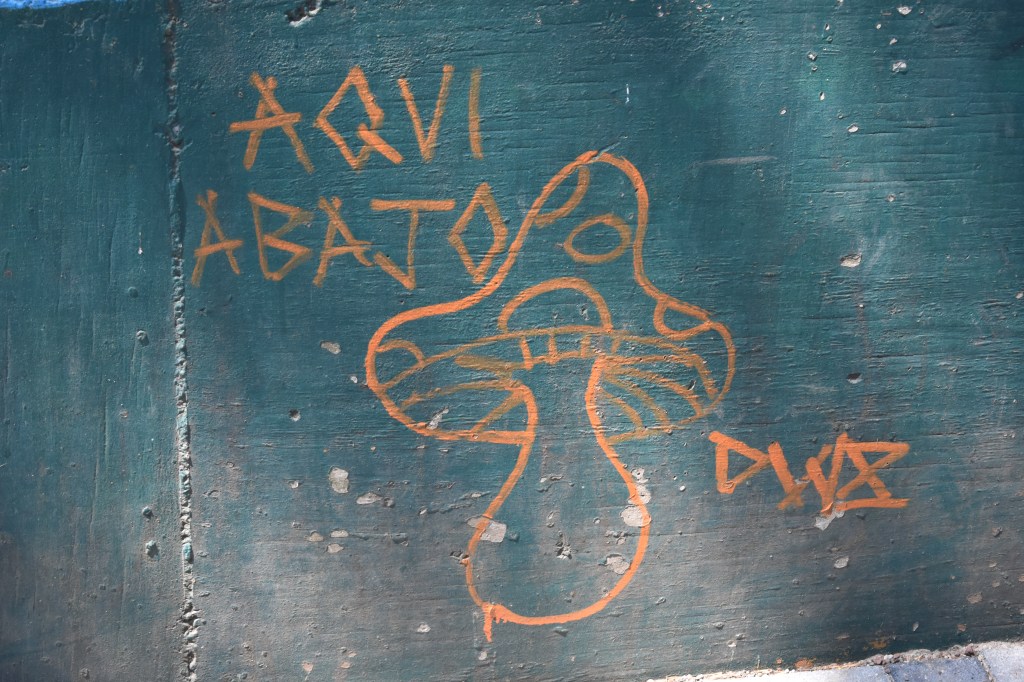
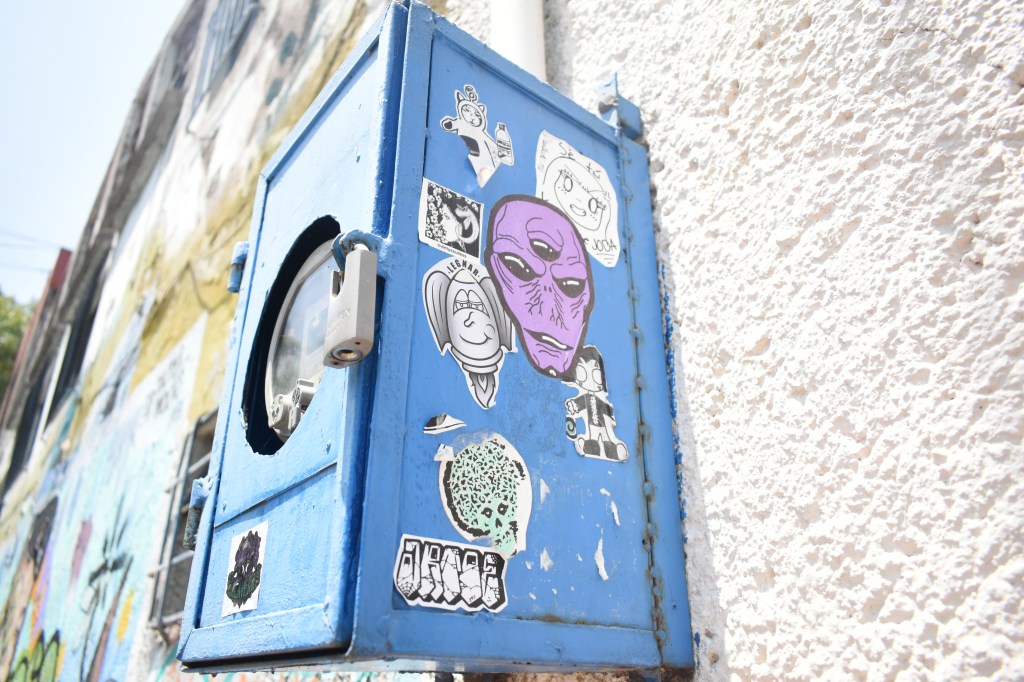
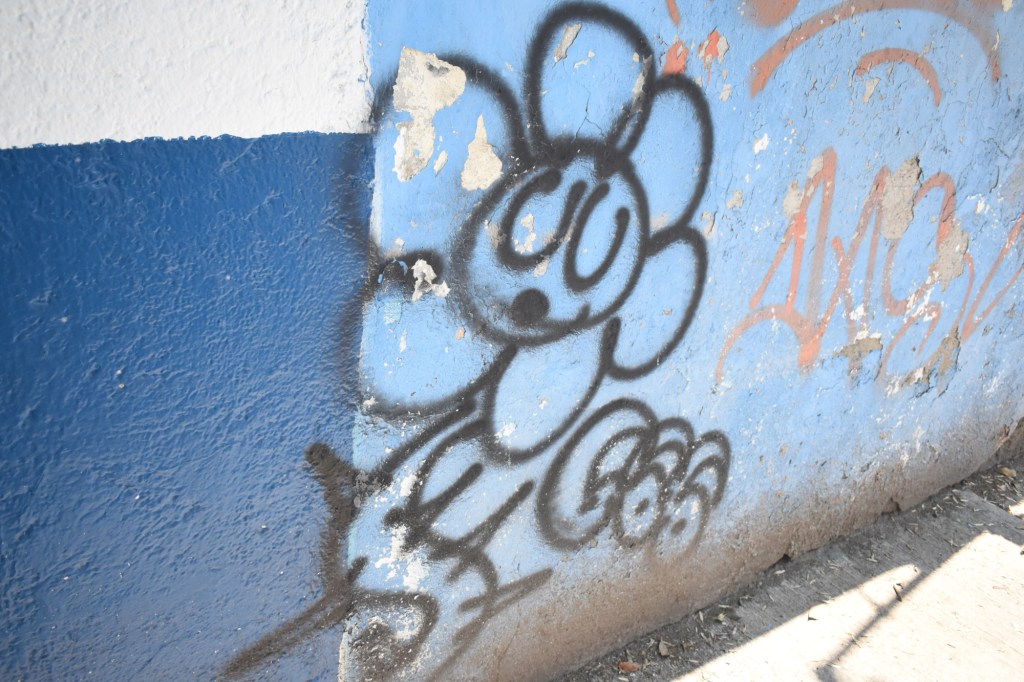
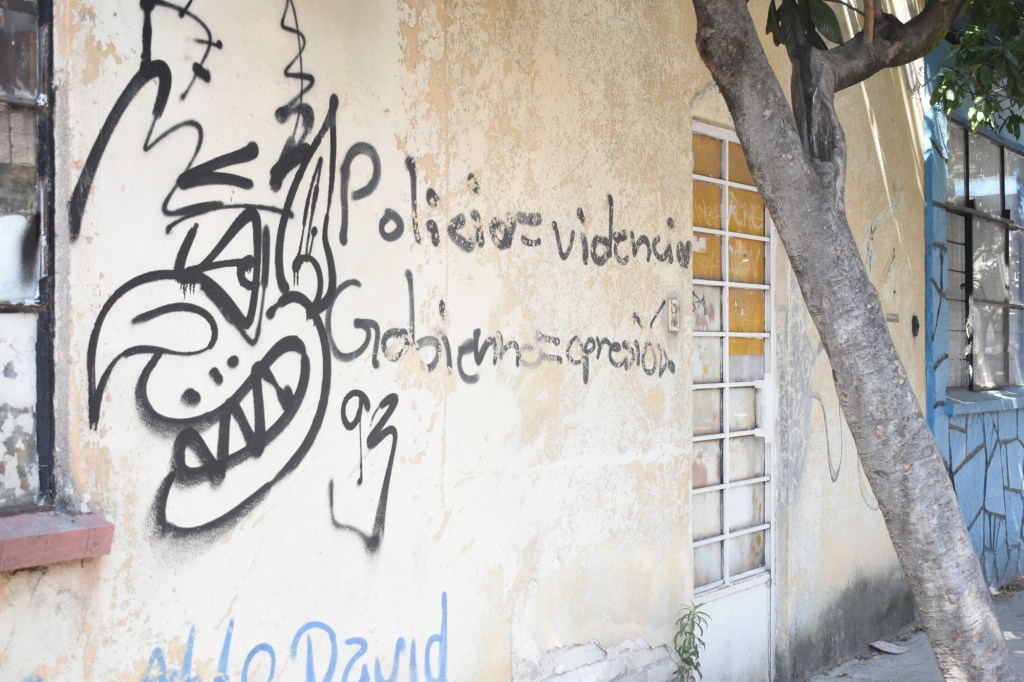
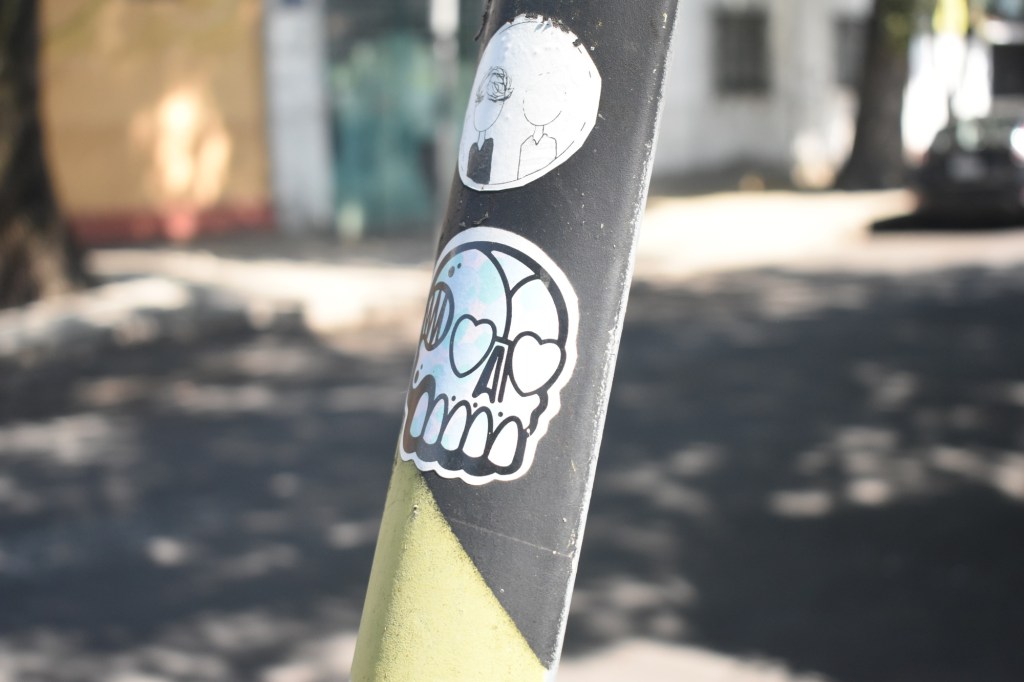
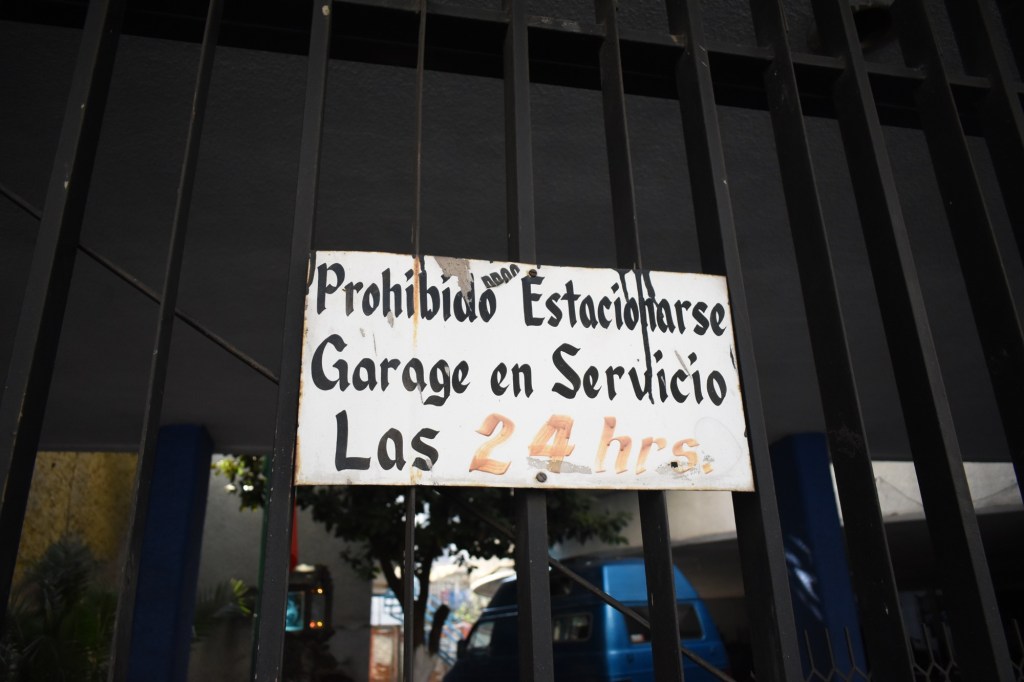
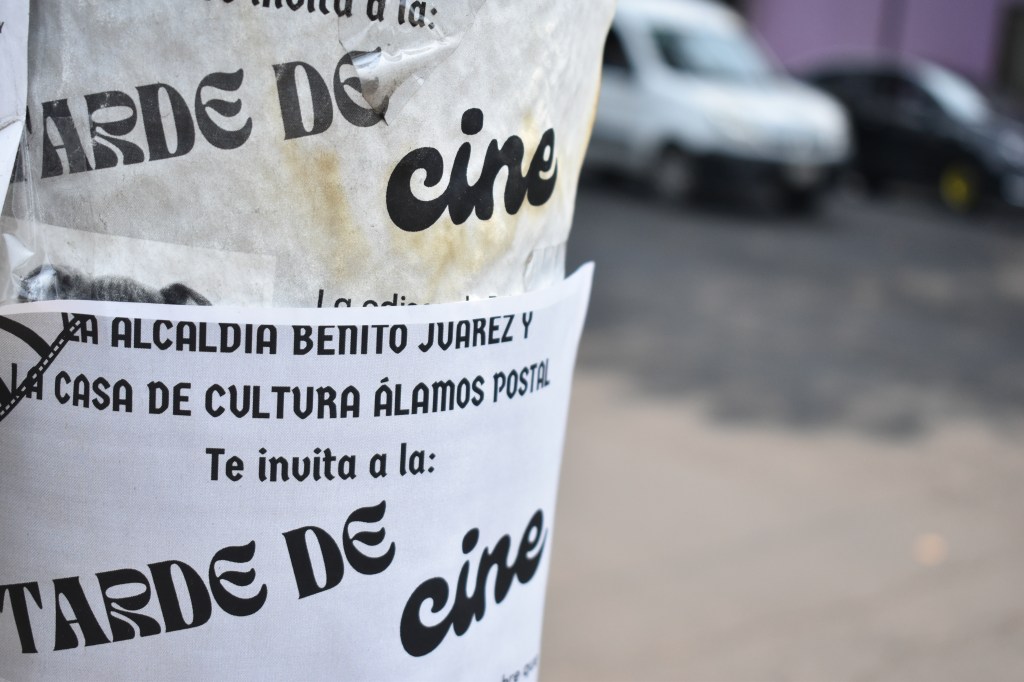
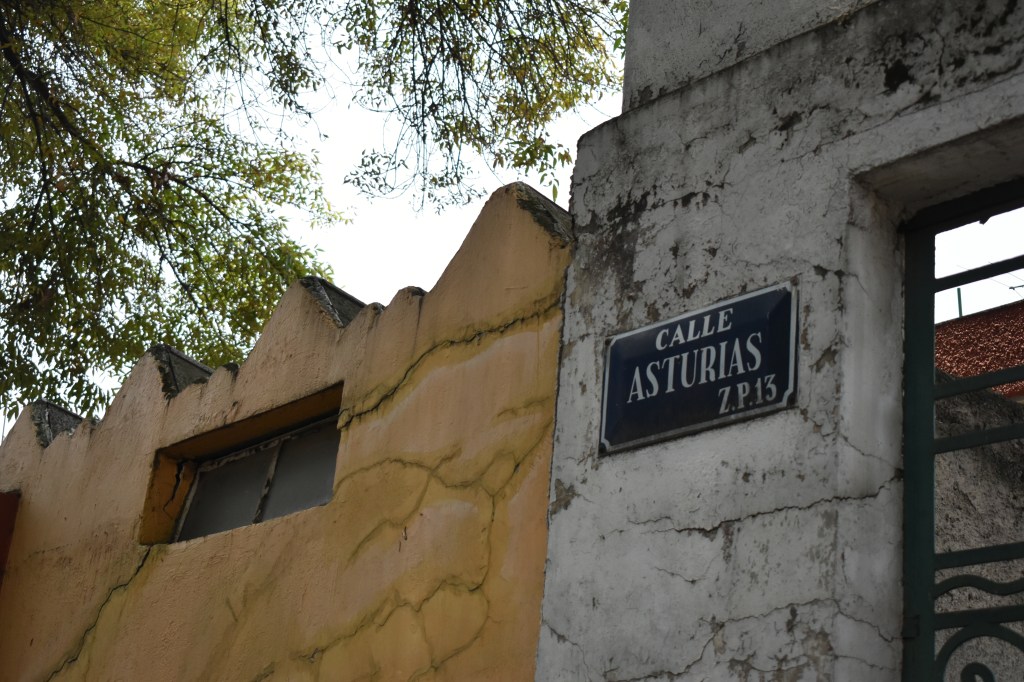
Back to the camera today. I am noticing what I am noticing. This is a process of writing, of all art making, but in photographs it is some how more deeply felt. What is it about the graffiti, the stickers, the posters and signs that make up the clothing of the street that appeals to me so? Why do I have photo after photo of spray paint skulls, flame decals, stencils of famous faces, cartoon characters, defaced posters? What is legible, what can I read in these things?

Down here, at the micro-level, these ways of marking public space, unintended and usually unwanted by property owners, city planners, and even some average citizens, are visual clutter. They crowd an already overstimulating scene, the city street full of people, with visual language. This may be the draw for me. As a 21st century writer, hasn’t it all been said? Isn’t it all being said at the same time as me? Yet I keep producing verbiage, hoping to catch your eye on this website, with a twist of phrase, I keep hoping that you’re reading this.

What is easier, pontification or self-reflection? Opening the third eye to the world or to the interior? Should I meditate on what these photos mean, or just what they mean to me? Does any photo mean anything except, “here is light, extracted, sliced, presented?” Light has drawn this meaning on these chemicals or in these pixels. Shouldn’t that be enough? But it never is, of course. We seek the caption, the artist’s statement, the context. We want a narrative. So image making gives way to story telling, or writing. The cave-wall painting must have flickered and moved in the dim light of the fire, and this would have all been accompanied by a song of the shaman-artist. So I’ll explain the pictures.

I’m an alien to the city in some ways. Not just this city, but The City, the Urban, the bustling world. A born and raised suburbanite, the streets I haunted as a youth are all verdant and sparsely populated, though lined with orderly houses, each with its own disaffected teenager inside, thinking he was all alone. We had graffiti in New Rochelle, even outside of the more dense downtown, but it reeked of adolescent dissatisfaction–or of more urbane taggers from nearby New York City. New Rich Hell, we called it as teenagers. Everything that smacked of rebellion smacked of aimless rebellion, a soup of malaise and a general grudging obligation TO rebel, American teenagers that we were. We didn’t know what we wanted to happen, but something, anything cooler than the landscape we were in.

Once I moved into the city–my carapace hardened, ironically, by my failure to live rurally, having attempted to be a farm hand and just spending more and more time on my parents’ couch, or taking train rides into New York to see friends–I paid more and more attention to graffiti, its contours and florescence. I also paid attention to the way its talked about. For the broken-window theory of policing, graffiti is fungal, it grows on dead tissue to show the death. The proliferation of graffiti in the city was marked as urban decay. But who had the city decayed for and for whom was it a vibrant underbrush?

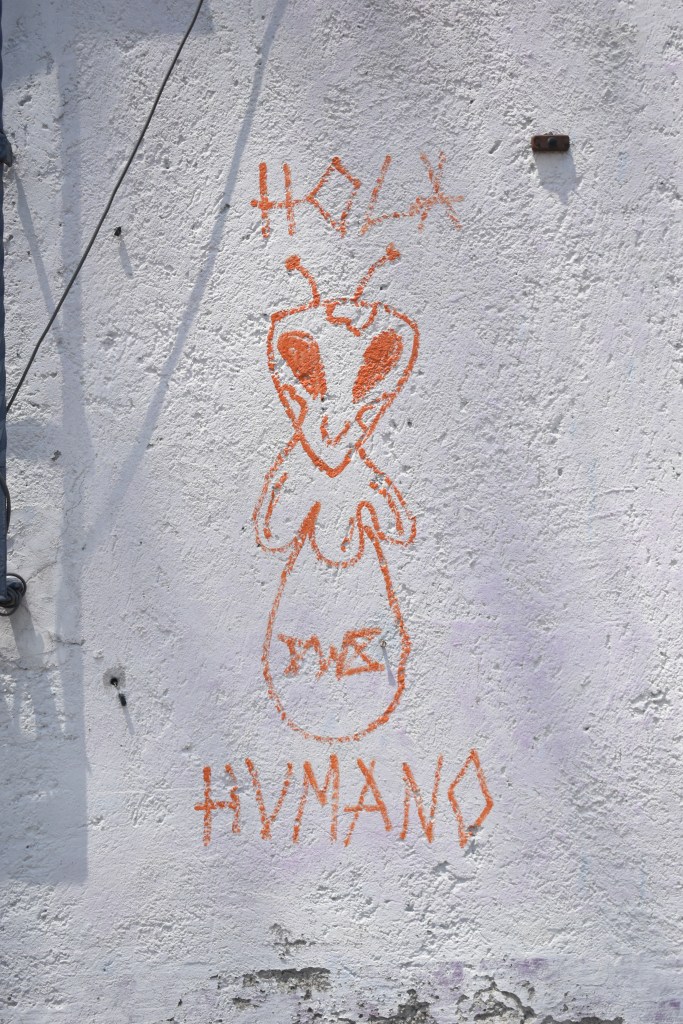
That was there. Now I am here. Mexico of course has an internationally very famous history of art on walls from the movimiento del Muralismo, but that’s not what I want to notice myself noticing by taking pictures of the street art here. I want to say that I’m noticing the mood of the city, that old saw that the city wears its feelings in its graffiti. (Where did I get that? Terry Pratchett, I think.) I don’t know if that’s true. But oh what if I am documenting something as immense as the way Mexico City feels? Wouldn’t that be something?

But I doubt it. What would that even mean? How would these pictures, so dimly lit, as the rainy season shaded my efforts, imply or translate the feeling on the streets, as government employees were shot, or as the streets fill with anger at Neo-colonialism and rent hikes, or as my son’s Spanish grows and the rains fall and fall? Best to leave the mood of the city to the photo journalists and try for beauty.

Beauty. What is it I find so beautiful about these photos? I could be harder on myself and my burgeoning hobby, and say I don’t find them beautiful, I find them at best, a good start. But I do find them beautiful. I like the light, the way it dances or sinks. The stickers and drawings and signs make me laugh. The colors awe me. I need these photos, to keep me noticing. Noticing what? The way the light moves down the street and strikes someone else’s art.

A Vist to el Museo Nacional de Antropología

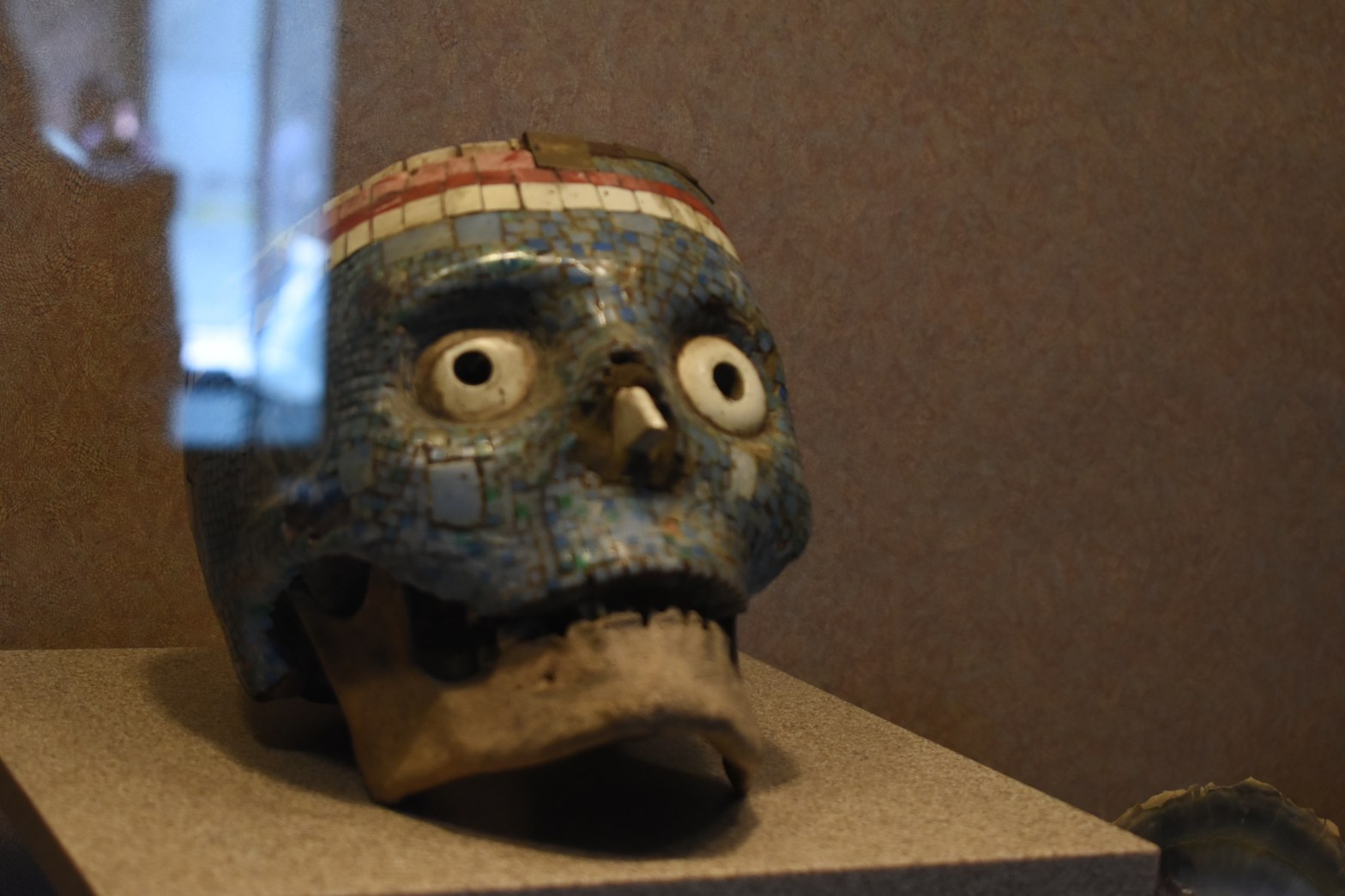
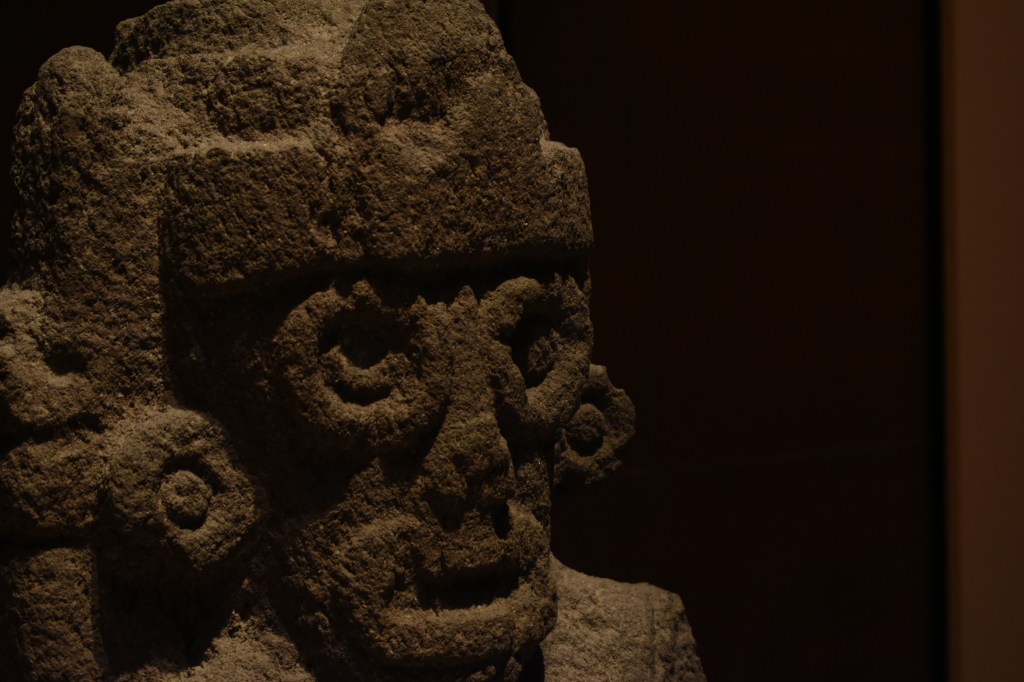
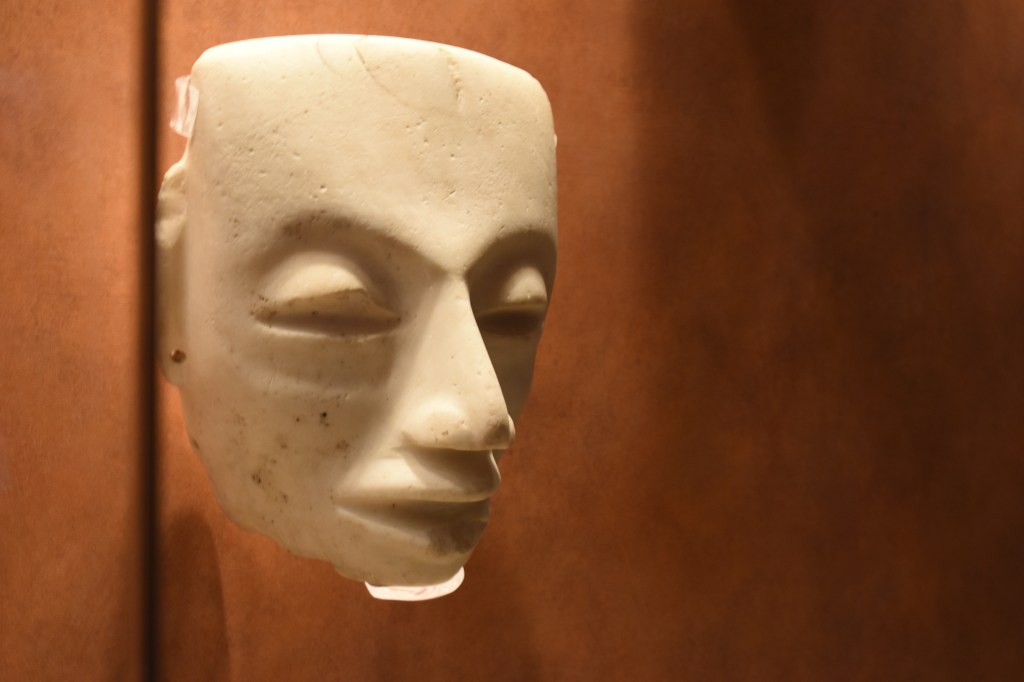
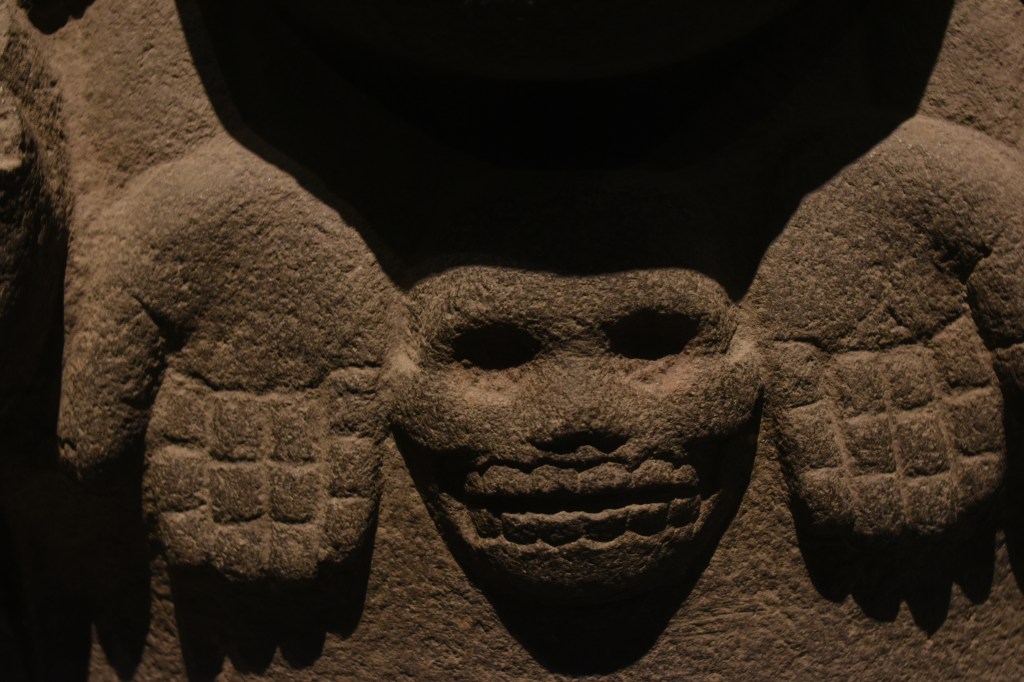
These pictures catalog what caught my eye most recently at el Museo Nacional de Antropología in Mexico City. I feel a certain guilt for failing to have done the work here of distinguishing between cultures, artists, recreations and originals. But I wanted to preserve the feeling of a museum, where the past arrives in a jumble. We confront the past in photographs, often, and in artifacts when we have the chance. The present regards the past in an effort to shape the future, most often, but sometimes it is good to simply sit with the fact that to be human and to be here has been a fact for a long time, longer than we can experience, in one museum trip, in one lifetime.

10 Photos As A Beginning

I don’t know how this will work. There is so much to discover. Apertures and light. A camera is a room, so is a stanza. A paragraph has no etymological connection to a room, a space to be inside, but it has a spiritual one.

Here is what I am trying to say. I am tired of content. Not of substance, that which fills the room with meaning. Rather, I am tired of endless scrolls and other people’s designs, being trapped in infinite palaces where all the rooms look the same.

I am done, in other words, with Instagram. This may be a grandiose pronouncement from someone who is drunk on the high of handling a Nikon D5600, a powerful but still basically comprehensible digital camera that my wife, Atenea bought when photography peaked her own interest in the pandemic years. Now my efforts to catalogue the Mexico City streets we live on live side by side with her entries into family archives. My pictures are devoid of people for the moment, because of ethical concerns about capturing someone without their permission, or even with it. Hers burst with relatives, pride in small and large accomplishments, colleagues and friends.

We were talking about rooms. On Instagram, every room is the same. Every frame is the same. Every picture is filling a frame that I did not build, and creates an impression I have no control over, and no investment in, except that the frames used to be full of friends, relatives, colleagues. Now they are advertisements, outraged news items, dead children. I can not keep living like this. I can not keep providing images to run alongside, to distract from the murder of children in Gaza and the rest of Palestine. I can not keep up with all the losses to Fascism, and I can not get my hopes up with each resistance effort. I have to stay focused.

Focus on a camera is a matter of turning, twisting, moving in circles and spirals. We moved to Mexico City from New York in December. It is a return for Atenea, it is a return of sorts for me, and it is so wholly new. For a moment there, in the late winter, everything was chaotic and dim. I experienced a depth of homesickness I had not felt since my first week on Kibbutz Sde Eliyahu in the Galilee, where I felt a profound alienation from both the lonely world of Orthodox religious Zionists immediately around me and the home I had left some 5500 miles behind. That dimness is still in these photographs. I seem to be more pleased with the results of the camera when it takes in less light, when the shadows are longer, and it’s hard to make out the edges of things.

I survived that darkness, on Kibbutz, here in Mexico, the sense of being adrift in a massive world. While in Israel, the shadows lengthened and I ended up spinning out into the misery that would consume my 20s, in Mexico, I have been building. Building my writing practice. Building my Spanish skills. Building shelves for books. Building my family. Most of this is a metaphor — I should note Atenea’s uncle and a local furniture dealer built the shelves in our apartment — but out of the darkness, angles and sudden contrasts of light are appearing. The make an image. They leave a mark.

Photographs, marks made of light, whether on a digital sensor or on film, have a sheen of authenticity. They seal a version of the truth. That relationship with the Truth, with what has been noticed in reality, with what the light touches, might be what gives them beauty. I don’t know. I haven’t been at this very long. Just a week of taking pictures and thinking about them. A new friend from my MFA program in creative writing, which I graduated in January, is both poet and photographer. I asked them what they feel is mutually reinforcing about writing and photography. They said they think of themselves as not taking photographs “of” things, but rather “about” things. In this way, a photograph and a poem both must mean something, convey something.

I do not know what I want to say yet. About Mexico. About home. About light. About noticing. About truth. About frames. I just know I can’t say it with a social media post, that it has to be longer, a form of writing I control, a shape of my own design.

This is not to say I will never be on social media again. The devil is useful. I have often hated the idea of a necessary evil. Necessary to whom, and for what end? But it is true we all have a relationship with evil. In my case, I use social media to know about options and opportunities in the literary world, to know who is a bad actor or scam or cruel person to not be trusted, to promote my own work as it appears in publications, and even — still! — to talk to friends.

For many years social media reflected me, and like all reflections, it was stealing a bit of me, thinning me out, capturing my soul and not giving it back. We talk often about social media as a place of carefully curated personas. Even this gives these things too much credit. How can you carefully curate a persona inside someone else’s mind? Instagram, Facebook, Twitter, they all reflect the ideas of their creators. Not our ideas, no matter how well we appease the algorithm, play to their strengths, it is always their strengths. Never ours.

I’m not leaving, not exactly. You’ll see me, I’ll say hello, I’ll be around and available. But something must change. I can’t feed hungry mouths content forever. I need to start making art. Take a picture. Write an essay. As for how you’ll see it? Well maybe I’ll publish in a magazine. Who knows, I could try for a gallery show sometime. A book. Or maybe I’ll just put it on my blog.

Hell. Hold. Head.

I held my son today. Hauled him up by his armpits so I could gaze into his beautiful face, plant kisses on his cheeks. Today, I watched a man holding a headless corpse of a young child in much the same way, a fiery hell behind them.

I looked at the headless Palestinian child, and the mix of horror and tenderness with which the man held them. I looked at the flames and smoke. I thought about Israeli soldiers and drones, their bringing of hell to the people in the video on my phone.

I thought about Israeli soldiers and I thought about hell.

I thought about my son and holding children. I thought about telling my son, when he bumps his head, my love, watch your head, it’s precious cargo. Every inch of him a treasure. And this child, blown apart in a hell of Israeli devising. Every inch of this child burnt, much of the child severed.

I thought about these words: Hell. Israeli. Palestinian. Child. Head. Headless. Holding.

I was not raised to believe in a hell, but awareness of it soaked in via cultural osmosis, and the possibility of eternal torment terrified me as a boy. Many times my father could only comfort me to sleep by reminding me over and over that as Jews, we did not believe in that fearsome place, that it couldn’t touch me because it was not mine. An oversimplification of course. Many many Jewish texts and religious thinkers posit a time of torture and horror after death for the sinful. To this day, you can be threatened by rabbis and others with a fate in Gehinnom, an eerie valley near Jerusalem where, in the early common era, trash and bodies of criminals were burned. The Israelis have built a bridge over it, so you can pass over the valley without ever descending into it. 

When thinking about the religious value of Jewish cohesion, what we call Ahavas Yisroel, the love of Jews for each other, for the community, I for many years thought of a story by IL Peretz in which a Hasid has a nightmare where he is increasingly alone in a palace of ice. The Hasid wakes from his nightmare crying, “Oh Master of the Universe, I would rather burn for an eternity in hell with the People Israel, then spend another minute in this place!”

For years, this is the standard I held myself to. To love my fellow Jews, even if it damned me. 

I still love my fellow Jews. It has indeed led here, to Hell. I did not know, but should have, that Zionism would bring us here, that the government and soldiers of Israel would be so desperate to kill and punish the Palestinians for the crime of being their neighbors. Now we are here, with Palestinians living in a hell, trying to get free, and a state calling itself Israel stoking the flames with bombs made in the USA. And where does that leave us Jews?

I hold my child, and raise him as a Jew. I kiss his head; praise in Yiddish, his cleverness. Yiddisher kop, I say. Good Jewish head. The Palestinian child I see in my phone, headless. Behind my eyes. In my soul. Headless, small corpse. 

I want this war over. I want a free Palestine. I want us to hold our children, to raise our children to love who and what they are. And I want the martyrs to look down on their murderers, who will be, I hope, in Hell. God save us. God save the people Israel, from ourselves, from Zionism. From Hell.

Two Jewish Poems by Mordecai Martin

I started taking my writing seriously by taking poetry seriously, spending time in workshops and reading collections. I never published any poems. I never felt they were strong enough to submit, but I wrote them, including two that feel pressing today. One was my response to the Squirrel Hill shootings at the Tree of Life Synagogue in Pittsburgh, PA, which robbed us of 11 mostly elderly Jews. Today is the 5th anniversary of that terrible shooting. The other is a poem about giving up Zionism, the creeping sense of dread that led to it, and the exuberant freedom I found on the other side of that toxic political ideology. I share them both here now.

Squirrel Hill

Awkwardly
meet me at the fringes of our prayer shawls
Lightly grazing each other’s lives
Shuffling to stand
In carefully prescribed distances from each other
Neighbor and Brother
You bow, then I bow
So it looks like I know when to bow

Anxieties of a Jewish poet
Do I say ציתצית?
“Fringes of our prayer shawls” is lovely, tender, liminal
But a translation
Why should I translate myself for them?
What did they ever translate for me?

A pillar of the community holds up what, exactly?
When it falls, what comes crashing down with it?

Liver-spotted hands shake mine
Shkoyach!
Liver-spotted hands tremblingly spread schmear on a bagel

I say, “I dreamt of world without Jews. I couldn’t tell you what was different, but there was no point to anything anymore.”
You say, “We will replace our enemies”
I say, “The first law of the world is fear and so the second is kindness.”
You say, “The nature of the book is to humble, but humility is not always wise.”
“A bris is the first, important betrayal, a fundamental admission of weakness from the parents,” I say.
“They are declaring that they can’t save you when God wants you to bleed.”
You say, “You have cream cheese in your beard. Nope, it’s whitefish salad.”

Foolishly, I once recommended the abolition of Kiddush
To spare us all the anxiety
Where would you be then, my Brother? When would I hear from you?

I’ll see you next week.

I Stopped Being A Zionist!

A Poem in 12 tribes that are all Israel. Cut out each sentence and fill the blank with each one, until the filled in blank is a mirror. 

I stopped being a Zionist! because ________


From the river to the sea, Palestine must be free.

Most Jews break my heart.

I suspect the side that’s quibbling about what precisely IS ethnic cleansing of being up to no good.

Olives taste best without ash.

Zionism got boring real fast, in a sort of insidious way.

Golda Meir called the Mizrahi Black Panthers, a movement for economic and legal parity between European and North African Jews, “not nice boys”

I saw a documentary once which made an earnest argument that Moshe Dayyan is somehow magnanimous for not blowing up the Temple Mount.

I would be a terrible soldier.

We all must break our fathers’ hearts.

There are brothers who sit on opposite sides of a wall, not seeing each other for decades at a time. The brothers love one another. The wall has holes in it but the holes are full of soldiers

I trust Palestinians and other people when they say they don’t want to hurt Jews. I have been wrong before. Still, God only asks for trust from us. 

I saw a nasty glint in my friend Benny’s eye one day, and it never went away.

The First Time I said Free Palestine

My sister sent the family chat a D’var Torah, a holy word of teaching, this morning. She said it encapsulated many of her feelings in the last few weeks of sorrow and war. While I found the word of Torah quite beautiful and well written, I did find it to fall short in several ways to address what I feel is necessary to be said in this moment, namely, that what the Israeli government is doing in Gaza is a genocide, atrocious and unforgivable, and that we should all pray for and work towards a Free Palestine. I thought back on my own career of teaching Torah, which I have been fortunate to do in many communities, including my most recent synagogue, Minyan Dorshei Derekh as part of the Germantown Jewish Centre in Mt. Airy, Philadelphia, where I used to live. Here is a piece of Torah I felt was necessary to teach there when Gaza was bombed in May of 2021. I share it here, in hopes of showing what Torah can be learned when we open our hearts and minds to the liberation of all people, and refuse to benefit from the oppression of anyone.

Hello, good Shabbos. Thank you for allowing me once again to give the Dvar Torah here. I sometimes don’t take the time for Torah study that I should, and it always centers, calms and uplifts me when I do manage to take the time to read the Torah portion, think on it deeply, and bring back a reflection on it to my community here at Dorshei Derekh. And I’ve needed centering, calming and uplifting these last few weeks, as the state of Israel, which makes extensive claims to represent the people Israel, proceeds to violently destroy lives in Gaza until in the ominous terms of Defense Minister Benny Gantz, “There is complete quiet.”

If you’ll forgive me for working back to front, at the end of our Parasha, Nasso, there is a verse that confounds the Hebrew grammarians. וּבְבֹ֨א מֹשֶׁ֜ה אֶל־אֹ֣הֶל מוֹעֵד֮ לְדַבֵּ֣ר אִתּוֹ֒ וַיִּשְׁמַ֨ע אֶת־הַקּ֜וֹל מִדַּבֵּ֣ר אֵלָ֗יו מֵעַ֤ל הַכַּפֹּ֙רֶת֙ אֲשֶׁר֙ עַל־אֲרֹ֣ן הָעֵדֻ֔ת מִבֵּ֖ין שְׁנֵ֣י הַכְּרֻבִ֑ים וַיְדַבֵּ֖ר אֵלָֽיו׃. We have three uses of the root “diber” “to speak” here. The one that many of the commentators find puzzling is the middle מִדַּבֵּ֣ר. The vowel is not quite right, it should be ‘midaber eilav’ ‘Speaking to him’ not ‘meedaber eilav’ meaning . . . what exactly? The midrash comes in to say, read not meedaber, but mitdaber, a reflexive verb. Which raises the interesting, potentially mystical possibility that the voice that issues from between the cherubim on the arc of the covenant, the voice that Moshe hears, the Divine Voice . . . is talking to Itself. That God never addresses Moses, that the Eilav, to Whom God is speaking is God. That the commandments, the stories, the wisdom that flowed from the Divine to the Human is just an eavesdropping by a sneaky ape like creature. That God has addressed the Torah to Godself, and we are interlopers on a private conversation. Baruch Hashem, that is disproven by the very nature of Revelation at Sinai, the Revelation we celebrated last week, the fact that sometimes Truth thunders from a mountain, is transparent, is everywhere, is unavoidable. 

So we know that God IS talking to Moshe, even if God addresses Godself. But is God talking to us? Rashi quotes a midrash that inside the tent of meeting, within the holy of holies, God’s voice is like thunder, as it was on the mountain. But just outside the boundaries of the Holy, just outside the curtain, if you were to listen in on Moshe and Hashem from a unsacred and profane space? You would hear nothing. There would be, to quote Benny Gantz, “Complete Quiet”

There is a truth we are not hearing, although it is everywhere. We dissemble it, we call it complicated and wall it off behind experts who never seem to name it. But truth is never too complicated to be understood. We ignore the people who speak the truth. We call them foolish, or too young, or too soft hearted, or too innocent and utopic, or too gullible or too ashamed. I’ve been called all that, when I say two words: Free Palestine.


There is something I’m trying to get at here, but I need to say it plainly, without subtlety or allusion. I need to say: It is time to talk to yourself, as God does when God speaks in the holiest of Holies. It is time to have a conversation just between you and your most trusted confidante, the one that lives inside your heart. It is time to hear a new truth in the depths of yourself, maybe something you’re not ready to confront, maybe something you’ve been listening to for a long time. This truth, it may never make it outside the bounds of that conversation inside you, but I hope it does, I hope it comes down like thunder. It is time to hear two words: Free Palestine.

Last night, I went to a rise up shabbat, an action against Apartheid in Israel, put on by some fine young Jews of If Not Now. It was a sparse crowd, often drowned out by the ambient noise around City Hall, and Atenea and I were by far the oldest people there. On the song sheet was a song I have a particular loathing for: We are the ones we’ve been waiting for. What an arrogant song, I always seem to think. How smug, how self congratulatory. But as I was standing next to these brave young Jews, and thinking about how much older I am than them, but how I am only 34, not quite an elder, I found myself thinking about that song, and how there were no elders there to support them. Of course this generation reassures themselves that they are the ones they’ve been waiting for. Who else will come to save them from this world? They are that most terrible thing to see, which we have seen far too often since World War II: A generation of Jews left adrift from their elders. But this time, it is not because their elders were, has v’halilah, stolen from them. It’s because they cannot countenance their elders’ commitment to a militarized state that wages war against a captive population.

I know I’ve been very critical in this dvar Torah, but I do want to teach one more thing, one tiny piece of Torah, from the beginning of the parashah, as I said, I’m working back to front. In the previous parashah, we began a process that continues in this week, where the Levites are divided into families, and those families are given tasks pertaining to the worship of God, and to the disassembling and transporting of the Holy Tabernacle. Many of the families are given sufficient teams of oxen and wagons to carry their loads, but the Bnei Kohath, that is, the cousins of Moses and Aaron, are told they will carry the most sacred things throughout the wilderness, the Ark of the covenant, and that they will carry it, wrapped in a holy cloth, like our torah, and they will carry it, on their shoulders. These holiest of things can never be roughly thrown on the back of an ox, they can’t be hauled about as if they’re just anything. They have to be handed around, one to another person. These are the holy truths that have reached me, handed to me by everyone in this shul, every Jew I’ve ever met here. These are the holy things that I learned from you all. I am lucky, to have you all, to be in community with you, to struggle with and alongside you as we attempt to live in Peace, in Justice, and in a world with a free Palestine

In lieu of discussion, I will be reading the known names of the children who have been killed by the Israeli army in the assault on Gaza, over the last couple of weeks:

Mohammad Saber Ibrahim Suleiman, Age 15
Baraa Wissam Ahmad al-Gharabli, Age 5
Mustafa Mohammad Mahmoud Obaid, Age 16
Rahaf Mohammad Attalla al-Masri, Age 10
Yazan Sultan Mohammad al-Masri, Age 2
Hussein Muneer Hussein Hamad, Age 11
Ibrahim Abdullah Mohammad Hassanain, Age 16
Marwan Yousef Attalla al-Masri, Age 6
Ibrahim Yousef Attalla al-Masri, Age 11

Lina Iyad Fathi Sharir, Age 15

Rashid Mohammad Rashid Abu Arra, Age 16
Hamza Mahmoud Yassin Ali, Age 12
Yahya Mazen Shehada Khalifa, Age 13
Hamada Attia Abed al-Emour, Age 13
Ammar Tayseer Mohammad al-Emour, Age 10
Bashar Ahmad Ibrahim Samour, Age 17
Zaid Mohammad Odeh Telbani, Age 4
Hala Hussein Ra’fat Rifi, Age 13
Khaled Imad Khaled Qanou, Age 17
Hoor Mo’min Jamal Al-Zamli, Age 2
Ibrahim Mohammad Ibrahim al-Rantisi, Age 7 months
Ahmad Rami Mahmoud al-Hawajri, Age 14
Lina Mohammad Mahmoud Issa, Age 13
Mohammad Salameh Mohammad Abu Dayyeh, Age 9 months
Fawziya Nasser Mohammad Abu Faris, Age 17

Four children of the same family:
Amir Ra’fat Mohammad Tanani, Age 6
Ahmad Ra’fat Mohammad Tanani, Age 2
Adham Ra’fat Mohammad Tanani, Age 4
Ismail Ra’fat Mohammad Tanani, Age 7

Butheina Mahmoud Issa Obaid, Age 6
Amira Mohammad Mahmoud al-Attar, Age 6

Mohammad Zain Mohammad Mahmoud al-Attar, Age 9 months
Islam Mohammad Mahmoud al-Attar, Age 8
Mahmoud Hamed Hasan Tolbeh, Age 12
Abdullah Ashraf Abdullah Jouda, Age 12
Mohammad Ahmad Atya Bahar, Age 17

Four children of the same family:
Osama Mohammad Sobhi al-Hadidi, Age 5
Suheib Mohammad Sobhi al-Hadidi, Age 12
Yahya Mohammad Sobhi al-Hadidi, Age 10
Abderrahman Mohammad Sobhi al-Hadidi, Age 7


Yamen Alaa Mohammad Abu Hatab, Age 5
Bilal Alaa Mohammad Abu Hatab, Age 9
Miriam Alaa Mohammad Abu Hatab, Age 7
Yousef Alaa Mohammad Abu Hatab, Age 10
Yara Mohammad Mu’in al-Qawlaq, Age 9
Hala Mohammad Mu’in al-Qawlaq, Age 12
Rula Mohammad Mu’in al-Qawlaq, Age 5
Yazan Rami Riad al-Ifranji, Age 13
Ameer Rami Riad al-Ifranji, Age 9
Mira Rami Riad al-Ifranji, Age 11
Lana Riad Hasan Ishkantna, Age 5
Hana Shukri Ameen al-Qawlaq, Age 14
Yahya Riad Hasan Ishkantna, Age 4
Zain Riad Hasan Ishkantna, Age 2
Zaid Izzat Mu’in al-Qawlaq, Age 8
Qusai Sameh Fawwaz al-Qawlaq, Age 6 months
Adam Izzat Mu’in al-Qawlaq, Age 3
Dima Rami Riad al-Ifranji, Age 15
Tawfeeq Ayman Tawfeeq Abu al-Auf, Age 17
Dana Riad Hasan Ishkantna, Age 9
Ahmad Shukri Ameen al-Qawlaq, Age 15
Tala Ayman Tawfeeq Abu al-Auf, Age 13
Obaida Akram Abdurahman Jawabra, Age 17
Rafeef Mershed Kamel Abu Dayer, Age 10
Yousef Rafeeq Ismail Al-Baz, Age 13
Islam Wael Fahmi Dar Nasser, Age 16
Mina Iyad Fathi Sharir, Age 2
Nagham Iyad Abdulfattah Salha, Age 2
Dima Sa’d Ali Asaliya, Age 10

Ido Avigal, Age 5 and Nadine Awad, Age 16 were killed in Israel

Baruch Dayyan HaEmes, Blessed is the One True Judge, may their memories remain a blessing. 
The Cleft; The Minyan

When I woke up to the war, my wife said, “I don’t want you to be upset.” I was still mostly asleep. “Uh oh,” I said. “Why would I be upset?” “Netanyahu has declared war.” I thought about this for a moment or two. “On who?” I finally ventured. “Palestine,” she said, as if it was natural, obvious, the most Netanyahu thing to do. I scoffed and rolled over, went back to sleep, muttering, “But he doesn’t think Palestinians exist!”

By the time I woke up for real, in my comfortable bed, it was late afternoon in Jerusalem on the 7th, and I didn’t know how many Jews were dead. This is the great comfort that I am accused of by Zionists when I protest the actions of the state of Israel. It’s all the same to you, they say, you comfortable Jew in your big fat bed. What would you do if rockets fell on you? If you had to hide in shelters and be kidnapped and send your children off to the army? And of course, I have no answer for them. I just don’t like guns, and I don’t see the point in Jews swinging them around like we know what to do with them.

I try to remind Zionists of the joke my Yiddish teacher taught me: the Jew who, having proven he’s a crack shot in rifle practice after being conscripted into the Tsar’s army, is sent to the front against the Japanese. He is told to raise the gun, he does. He’s told to aim, he does. He’s told to fire, and he refuses. Three times, this pantomime and insurrection goes through. When the sergeant says, “What’s wrong, soldier?” the Jew responds, “It’s just, there’s people over there.” The Zionists don’t like the joke. They laugh, sometimes, but they don’t really get it, like you and I do. 

So I woke up to the war and I was upset. I was upset all week, but I was always going to be. It was the week of my son’s surgery. My son was born with a cleft lip. Right down the middle, a bit to the left. When I held him, and looked him in the mouth, like one looks at a horse one is buying, I could see his little pink gum, and his lip reached up to his nostril in a jagged left leaning line and then back down. I thought about the old legend of the angel who presses a finger to the lips of the about to be born, and silences them from teaching all the Torah they learned from Hashem in the World Before This World. I thought about Moses’ speech impediment, his “uncircumcised mouth.” I loved that cleft. How could I not? It was my son’s. It was my son. I loved it, and I condemned it to becoming a lip, because the doctors told me he wouldn’t be able to eat or speak. Who needs to eat, I sometimes thought wildly. We have love. Who needs to speak? But we scheduled the operation anyway, so I spent the first week of the war preemptively mourning an absence of an absence, the loss of a split, the death of a cleft. It prepared me well for what was to come.

By the Friday he went in for the surgery, Israel had begun bombing Gaza, giving 1.1 million people 24 hours to flee to nowhere in particular. I kissed my baby and handed him to the surgical team, who if you think about it are just men with very sharp knives, and tried to ignore the television in the waiting room. But they got these things now, iPhones? You just look at them all day. So I knew what was happening. God help me, I was holding my son after major facial surgery and my heart was in Gaza, trying to hold children I’ll never meet. I suppose holding children is like that. You hold one, you want to hold them all. My mother had to scream at me to stop me from going to a protest of the genocide in Gaza that Friday night. I almost ignored her because we don’t agree about politics, but she was right. I held my son and sent my heart to Brooklyn to stand with the Jews on the streets.

The bombs fell. I practiced my Yiddish on the 2 year old Orthodox girl with hepatitis we shared the room with. The bombs fell. My son took oxycontin for the pain and slept, I can only hope, dreamlessly, painlessly. The bombs fell. We got discharged from the hospital. The bombs fell. My wife learned how to clean my son’s nasal stents. The bombs fell. I adjusted the way I hold my son so that he wouldn’t rub his face on my arm. The bombs fell. We held his hands from his face. The bombs fell. 

By Wednesday, my wife and her mother agreed they could spare me for the day. I went to DC to march on Capitol Hill. I thought about what to put on a sign. A line of Yiddish poetry? A piece of Talmud? Eventually time ran out, and I hadn’t even bought cardboard. I went to the Jewish Voice For Peace rally and took a sign that was being handed out, listened to the speakers, tried to shout along. I hate being at a protest, truly. I’m a shmoozer, I like to talk things through. Shouting? In a crowd? Sounds lonesome to me. But I went. I marched. I was part of a mass. There is more than one of me. There are thousands of Jews who say no more of this. Who say not in our name. Who say never again meant never again to anyone. Who say “There’s people over there.” I look at my son’s lip, and I miss something. A cleft. A split, right down the middle. Leans to the left. I hold my son and I pray for the people of Gaza. But like every Jew, I never pray alone.

Midnight A Train

I leave 190th street and a municipal elevator rockets me into the ground where I meet one of those subway trains that wend their way under the earth that I have been riding for much of my life and much of my parents’ lives and much of my grandparents’ lives and much of my great grandparents’ lives. I ride the elevator with a freshly groomed Scottish terrier who is interested in me and his owner who is not. I use a new technology to pay my fare, not a token, not a dime, not a metro card, but my telephone, and if you had told my grandmother that one day we’d use our phones to pay for the subway, she would have been. . . What’s the feeling when you don’t even own a piece of technology, the telephone exists at the corner store, and when your father disappeared for a few days, and then called home from Atlantic City, and then asked to talk to you, his daughter, not his wife, and so your mother, my great grandmother was furious at him, and then a lifetime later your beloved fifth of ten grandchildren summons you from a peaceful rest in eternity to tell you that now he can pay his subway fare with his telephone? My grandmother Pearl died in 2005, a few years before the iPhone, but then again, I bet she could see the writing on the wall, she was a smart cookie.

I take the A express down to West 4th and I make my way through the frozen night to the east village, to Little Poland, where I meet two friends and eat two holuptzes, but they’re covered in mushroom gravy! It’s delicious, and I wonder why I grew up with sweet and sour sauce on my stuffed cabbage, why I miss it, even now that the mushrooms are delighting me; why I need that tang, and the hot burst of the rehydrated raisins. We talk about movies and mental illness and part ways so they can take the Q to Ridgewood and I can take the F to the A to Washington Heights. 

Waiting for the A, I see a strange sight, a young man has sat on the edge of the C train platform, just opposite me, dangling his legs over into the shallow precipe the train will rush through and if he doesn’t move his legs, they’ll be severed, or he’ll be dragged under and he’ll be dead and the train will be delayed. Eventually others notice the young man calmly sitting in peril, and they whisper to themselves and nervously eye the man, the board that says the C train is getting near, their train, which may be delayed by this horror, which may shower them in gore, they’re so close, and otherwise make them complicit, so a few of them surround him and start shouting. They shout “you need to get up” and I do not hear what the man says in response, something like “you need to get out.” An argument ensues, the C train gets closer, and closer, it is now visible to me and people are shouting and it honks its terrible honk and someone has moved as if to grab the man, but the C train has stopped now, and now he’s up, the train pulls the rest of the way in, and the man is asking for money. Angrily the people who tried to save his life, save their subway journey, sweep past him into the now open doors of the train, and a few stop to give him money, and he gets on the train too, still begging, he holds the door open for a moment, costing the train another second, and then the door closes and the C train takes off. Some people look on and think a tragedy was averted and some people look on and think a scam took place, but all I can think is, he had to sit in front of an oncoming train to get people to care who he was, to get his money, and it’s so cold, oh life is hard, it’s so hard, it’s so hard. 

I wrote this on the A Train to 190th street making local stops, hearing Spanish swears and the sweet snores of the man spread out over three seats asleep on his sneakers and the grumbling cyclist who hates the announcements of delays and curses the driver of the train and the driver of the train announcing our delays. It is a quarter past midnight in the subway in New York City. I’m almost home. 

There Goes Funky Flashman: An obituary for Stan Lee

I wrote this on November 12th, 2018 for my now-defunct newsletter, and I’m posting it here in honor of the 100th anniversary of the birth of Stan Lee.

Stan Lee died today, aged 95, outlasting just about anyone who thought of him as anything besides the lovable grandfather of Marvel Comics. Oh, there were always mutterings, of money gone missing, of companies mismanaged, of credit stolen. But c’mon! How could you hate that tremulous twinkle in his eye, that signature ‘stache, the surprisingly strong voice still shouting out lines in blockbuster movie after movie.

I’m thinking about two significant factors in Lee’s own accounts of his work on the Marvel universe, specifically it’s early successes with the Fantastic Four. One, is that he thought the material beneath him. Famously, that’s why he’s Stan Lee, not Stanley Lieber. He was holding onto his given name for his career as a novelist, which he assumed would be where real fame, fortune and glory awaited him. Two, is that he created the characters which are his enduring legacy because he thought no one was paying attention. Marvel Comics-heck, superhero comics in general in the late 50s-was a failing proposition. Lee claimed that it was because his publisher Martin Goodman didn’t think they were gonna make it another month, that he, Lee, was given free reign to create something that nobody had ever seen before.

As usual, it’s not the truth value of these claims that interest me, but what they say about Lee as he created himself, and was in turn created by a comic history that grew up around him. Lee positioned himself, and alternative retellings do the same for his colleagues and compatriots – Jack Kirby, Joe Simon, Steve Ditko, Jerry Siegel, Joe Shuster, Bob Kane- as the ur-superhero creator. That image was of a scrappy child of immigrants, a New York City street urchin who became a WW2 vet who fought Nazis with a grim smile, and was unmistakably, without exception, Jewish. But where Kirby and Simon took on the gravitas of elder statesmen, Ditko the solemn and mysterious air of a devoted philosopher, and Siegel and Shuster the tragic role of victims of rich men’s machinations, Lee never seemed to lose that sparkle of disrespect, of untrustworthiness, of street-smarts and guile that was the early 20th century Jew’s inheritance from 19th century anti-Semitic characterizations of the Jew as criminal and mastermind. Lee’s public persona is in some ways a defanged Fagin.

So of course Stan Lee was bored and broke and nearly out of a job when he created the characters that have stayed with us this last half-century. Of course no one was looking. When else do scoundrels do their best work? And relatedly, of course Stan Lee is something of a trickster, a thief and a cad. This is not to minimize the extent to which some of his actions caused real pain and damage in his life. Especially notable is the way he and other men of the Marvel Bullpen took credit for hours of work by female artists and writers. It is just to say that as comic history moves on, as we memorialize and eulogize this man, as we come to terms with a complicated legacy, let us remember Stan Lee yes, as a real person with real flaws, but also as a character, a creation of himself, as masterful and complicated and collaborative as any of his others. There is after all, no better tribute to a writer. Excelsior, true believers.

You Can’t Stay Here: An open letter to Mayor Eric Adams

I am trying to end my time in Philadelphia. It has been difficult. I’m trying to sell my house, and no one wants to buy it. Well that’s the way of the market, I suppose. Interest rates and so on. Maybe the basement is damp. Things invisible and visible, that’s what is happening.

I am a mentally ill man. I have spent time in psychiatric care. When I bought this house, it was a great salve to a real fear of mine: that in my muttering, and not bathing, and great cruelty to myself, I would wind up failing to meet my obligations to myself and a landlord, and wind up, somehow, on the streets. That from there, without access to my medications or my psychiatric care and my family, my condition would worsen. That I would meet a gruesome end, in the cold of the street. Perhaps a far off fear, but a real one, that haunted me. Fears are made of the visible and the invisible, what we can see and what we can’t. What is happening and what isn’t.

I am trying to move back to New York City. THE city, we used to call it in my youth in its suburbs, in Westchester. My wife and I, we both love New York so much. It is a kind of infection and a kind of home, something between the two. It is under our skin. It is an invisible and visible thing. We want to get back to it. We are trying to sell my home so that we can return, to my larger home, to the city I love.

In a front page news story, the New York Times reports that Mayor Eric Adams wants to ramp up the City’s ability to coerce the visibly mentally ill on the street into treatment. (Mental illness is also a visible and invisible thing.) The new directive cites that it will affect those who show “unawareness or delusional misapprehension of surroundings.”

Sometimes I get so scared I scarcely know or care where I am. I throw myself to the ground. I talk to myself to soothe myself, to work out a pain inside me. I may strike my face. It’s been a few years, but I can feel these behaviors, just under my skin.

In the front page news story, when discussing the Mayor’s reasoning for his new policy, that might violate the Americans With Disability Act, which will force hundreds into the hospitals – the mayor and governor have ordered 50 whole new beds to be added to the psych wards; Mayor Adams is quoted as saying, “We’re going to find a bed for everyone,” – the newspaper cites “feelings.”

“[A] series of random attacks in the streets and subways has left many New Yorkers feeling that the city has become more unpredictable and dangerous.” (emphasis mine)

“The mayor has defended his focus on public safety and has argued that many New Yorkers do not feel safe. . . ” (emphasis mine)

In my time in psychiatric care, I have learned a lot about feelings. They get votes, not a veto, we say. Let them come, and let them go, we say.

I move through New York and I am happy. I move through New York, and I see sights and sounds and people that fill me with joy and great wonder. I move through New York, and I am safe. So I wonder. Which of us, Mr. Mayor, is showing “unawareness or delusional misapprehension of surroundings?”